LOOK CLOSELY, NOT PHYSICALLYGreen or hawksbill?
Read the clues.
These are general visual cues from research guidance. Photography, age, angle and natural variation can make identification uncertain. Never approach an animal to see a feature more closely.
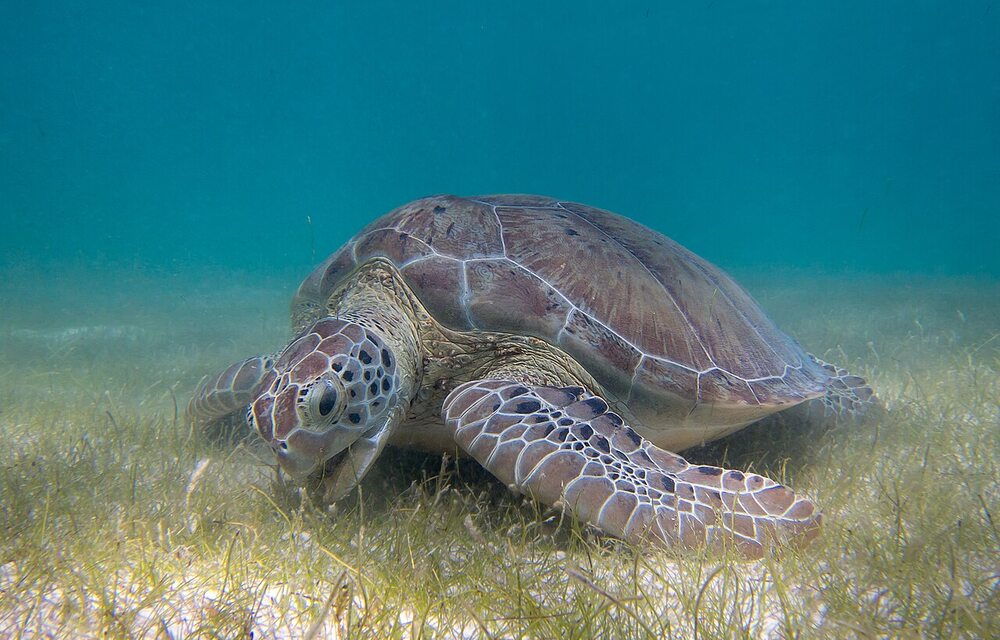
CHELONIA MYDASGreen sea turtle
Typically a more rounded head and beak, usually one pair of scales between the eyes, smooth shell margins and non-overlapping shell scutes.
- Commonly linked to Bermuda's seagrass feeding habitats
- Juveniles are a major focus of Bermuda research
- Appearance alone cannot establish individual identity
Read Bermuda Turtle Project research ↗
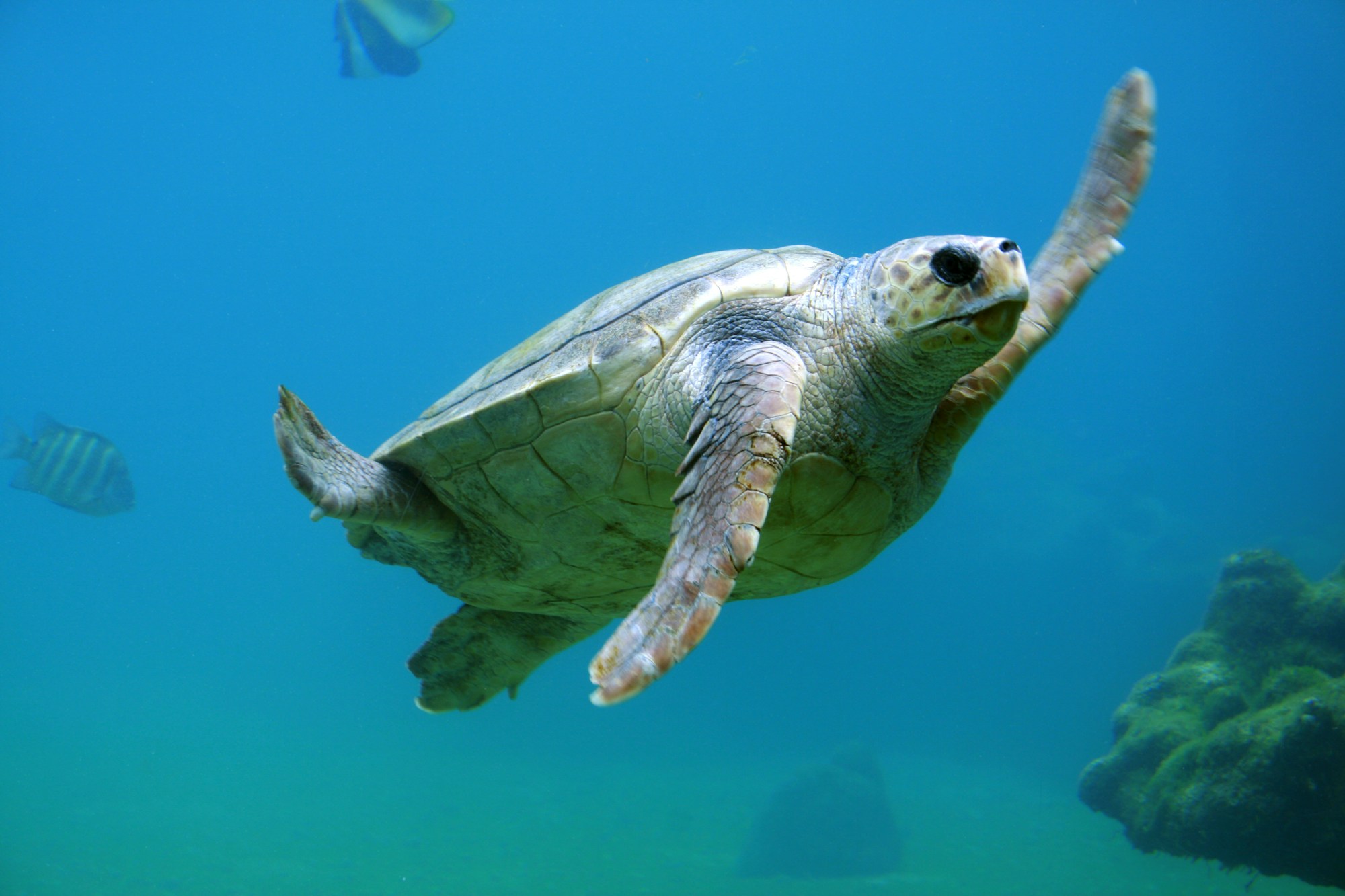
ERETMOCHELYS IMBRICATAHawksbill sea turtle
Often has a narrower, pointed beak, two pairs of scales between the eyes, and shell scutes that may overlap with a serrated shell edge.
- Often associated with reef habitats
- Shell and head features help distinguish from green turtles
- Scute and beak features may not be visible in every photo
Compare identification features ↗
Other sea turtle species may occasionally appear in the broader region. If a photo cannot support an identification, report it as unknown and let qualified reviewers decide.